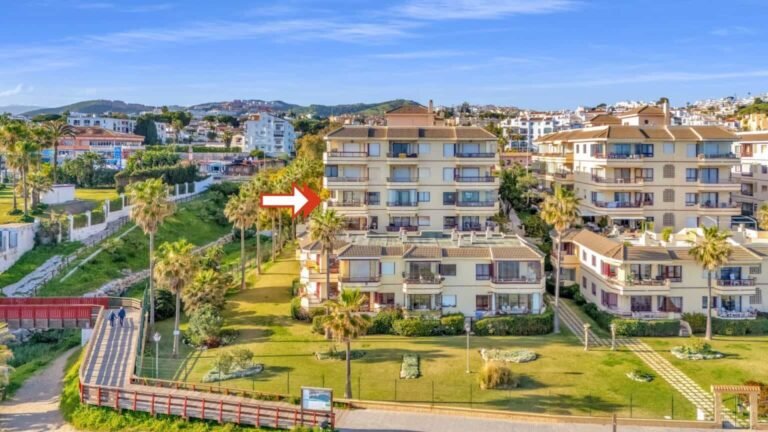
Somewhere between the morning coffee and the first swim, most people on the Costa del Sol end up walking along the sea. The promenades are where the coast lives: joggers at seven, grandparents with ice creams at six in the evening, families strolling after dinner. What many visitors don’t realise is that these promenades are slowly being joined up into one continuous route, the Senda Litoral, running the length of Málaga province from Manilva in the west to Nerja in the east.
It isn’t finished, and depending on who you ask it never quite will be. But large parts of it are already excellent, and with a train line along part of the coast and buses along the rest, you can walk from one town to the next and ride back with tired legs and a good appetite. Here is what is open, where the best walks are, and how to plan a day around them.
Popular tours and day trips from Málaga
The Senda Litoral is a project led by the provincial government, the Diputación de Málaga, working with the coastal town halls. The idea is simple: a public path for walkers, and in many places cyclists, following the shoreline for roughly 160 kilometres across fourteen municipalities. In practice it is a patchwork. Some sections are wide seafront promenades that have existed for decades and were simply adopted into the project. Others are new wooden boardwalks laid over dunes and rocks, footbridges across river mouths, and short cliff-edge paths that finally let you pass headlands that used to force you up onto the main road.
Progress figures depend on the source. Official statements have put the path at around 90 per cent complete, while independent walkers who have checked it section by section count less, because some stretches are walkable but not properly built. What matters for a visitor is that most of the coast between Málaga city and Estepona can now be walked with only short detours inland, and that the gaps keep shrinking.
Good to know
If you only do one walk, make it this one. Start at the Bajondillo beach below the centre of Torremolinos, follow the promenade west past Playamar and into La Carihuela, the old fishermen’s quarter where the smell of grilled sardines drifts across the path at lunchtime. Keep going and the promenade carries on without a break into Benalmádena, ending at the Puerto Marina, with its moored yachts and island-style apartment blocks.
It is flat, paved and suitable for pushchairs and wheelchairs almost all the way. Allow around two hours at a relaxed pace with stops. To get back, walk up from the marina to the Benalmádena-Arroyo de la Miel train station (about 20 minutes, uphill) and take the C-1 suburban train one stop back to Torremolinos, or simply catch one of the buses that run along the coast road.
Fuengirola has one of the longest continuous promenades on the coast, around seven kilometres from the Torreblanca end to the Sohail castle on its little hill by the river. It is lively, flat and full of places to stop, and the C-1 train runs underneath the town to its terminus in the centre, so getting back is easy from either end.
West of the castle, the character changes. Mijas has been building wooden boardwalks along its rockier coast towards La Cala de Mijas, and in 2026 several new sections came into service, including the stretch from La Cala to El Sheriff beach in June. The Mijas path is planned to reach about 12 kilometres in total once the last pieces between Fuengirola and La Cala are finished; in the meantime the unfinished part can still be passed on foot. Walking the boardwalk around the Calaburras lighthouse with the sea crashing on the rocks below is one of the best hours you can spend on the coast. From La Cala, buses run back towards Fuengirola along the main road.
Local tip
Walk with the sun behind you. In the morning, head west; in the late afternoon, walk east. You get the light on the sea instead of in your eyes, and better photos too.
Marbella was one of the first towns to complete its part of the path, and its promenade is a pleasure: palm trees, beach bars, outdoor gyms and a smooth surface that runs west from the old town to Puerto Banús and beyond towards San Pedro Alcántara. The walk from the centre to Puerto Banús takes around an hour and a half, and buses run back along the main road at regular intervals.
For something wilder, head east to Cabopino. Here the path crosses the Dunas de Artola, a protected natural monument and one of the last dune systems left on this coast, on raised wooden walkways that keep feet off the fragile vegetation. The old Torre de Ladrones watchtower stands above the dunes, and the walk continues along quieter beaches towards Calahonda and the Riviera del Sol area. It is a lovely early morning walk, before the beaches fill up.
The path is also well developed on the eastern side of the city. From the Malagueta beach you can follow the seafront through Pedregalejo and El Palo, then continue towards La Cala del Moral and Rincón de la Victoria, where a short section passes the cliffs at El Cantal through old railway tunnels. Further east, in the Axarquía, the picture is more fragmented, with long fine stretches around Torre del Mar and Torrox broken by cliffs that still require a detour.
The C-1 suburban train runs from Málaga city via the airport, Torremolinos and Benalmádena to Fuengirola, with stations close to the coast for most of the way. That makes any walk between Málaga and Fuengirola easy to plan as a one-way trip. West of Fuengirola there is no railway, so you rely on the regional and urban buses that run along the coast road through Mijas Costa, Marbella and Estepona. Contactless bank cards are accepted on most buses and trains; check the latest timetable in the operator’s app before you set off, especially in the evening and on Sundays.
A holiday home within a few minutes’ walk of the seafront turns the Senda Litoral from a day out into a daily habit: an early stroll before breakfast, a sunset walk before dinner. Many of the best-placed apartments are in Torremolinos, Fuengirola, La Cala and Marbella, with the beach and the path right outside. Browse holiday homes on the coast, or, if you are thinking of a longer winter stay, have a look at our long-term rentals. Own a property near the path? It is a genuine selling point, and you can list your home with us.
Top photo: Jl FilpoC, CC BY-SA 4.0, via Wikimedia Commons.
More for your trip
Partner links: we may earn a small commission at no extra cost to you.
Local services on the Costa del Sol
List your property
Reach guests directly for a low fixed fee – no commission on your bookings.
Not entirely. Official figures put it at around 90 per cent, but some sections are walkable rather than fully built, and a few gaps remain, mainly on rocky stretches west of Benalmádena, in Mijas and in parts of the Axarquía. Work continues, with full completion still some years away.
Largely yes, using promenades through Torremolinos and Benalmádena, but there is a rocky section west of Benalmádena where you may need short detours inland. The C-1 train follows the same route, so you can split the walk into stages.
The town promenades in Torremolinos, Benalmádena, Fuengirola and Marbella are flat and paved, so they work well with pushchairs. The boardwalks and rocky links in Mijas and around Cabopino can involve steps and sand.
On some sections, yes, either on a separate bike lane or on a shared path. Rules differ from town to town, and on busy promenades cyclists are expected to slow down and give way to pedestrians.
Autumn, winter and spring, when temperatures are mild and the light is good. In high summer it is best to walk early in the morning or in the evening, as most of the route has very little shade.
Discover Spain with Spainholiday
We share engaging articles on Spanish culture, food, sights and practical tips to help make your holiday even better.
👉 Like us, share our articles and keep following us for more inspiration for your next Spanish adventure!
Holiday homes on Spainholiday
PARTNER
Living in Spain – or thinking about it?
News, practical guides and local services for internationals in Spain on NewInSpain.
Advertise your business here
Restaurants, car hire, cleaning and local services: reach travellers and holiday home owners in your area.
Own a holiday home in Spain?
List it on Spainholiday for a low fixed fee – no commission on your bookings.