The first thing you often notice is not the taste, but the sight: long ham legs hanging in a bar or deli, quietly drying in the air. In Spain, Serrano ham and jamón ibérico are more than a snack on a plate; they are part of daily life, from a quick tapa at the counter to a long lunch with wine.
Serrano ham is the most common cured ham in Spain. Its name comes from *sierra*, the mountain regions where it was traditionally cured in cooler air, and that mountain link still shapes its character: lightly salty, clean-tasting and easy to pair with bread, tapas and a glass of wine.
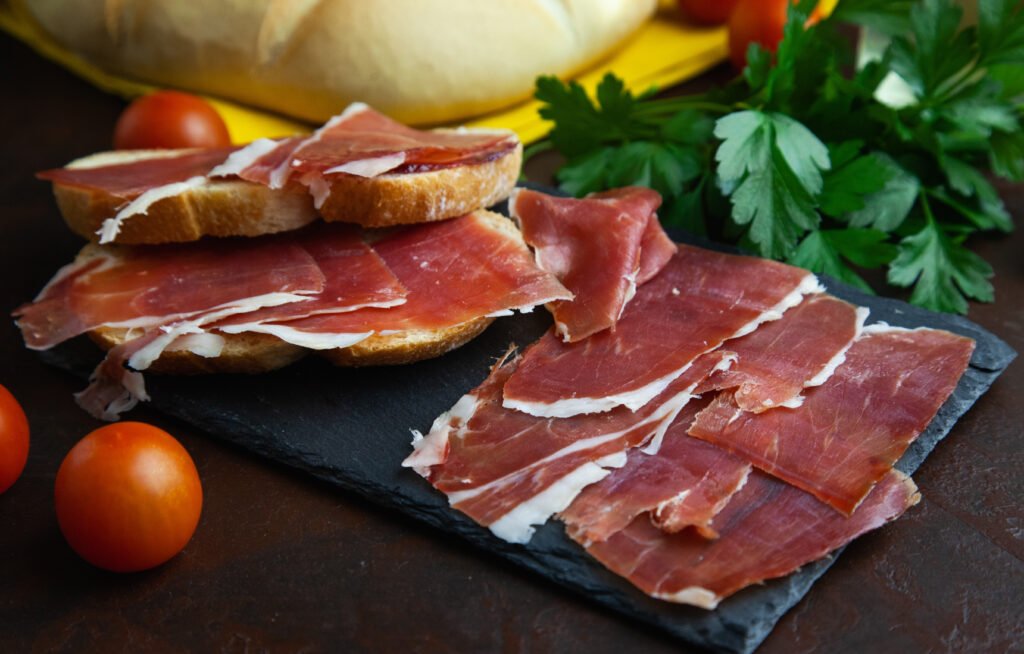
You will find Serrano in many grades, but even the simplest versions can be satisfying when they are sliced well. Ask for it cut very thin, so the texture stays soft and the flavour opens up on the tongue.
If Serrano is the reliable everyday choice, jamón ibérico is the special-occasion ham. It comes from the Iberian pig, known as *Pata Negra* because of its dark hooves, and the best-known hams are linked to animals fed on bellotas, the acorns from Spanish oaks.
That diet gives the meat its marbling and its deeper, longer finish. After slaughter, the hams are dried and aged for up to 36 months, which is what turns them into something with real depth and a slow, lingering aroma.
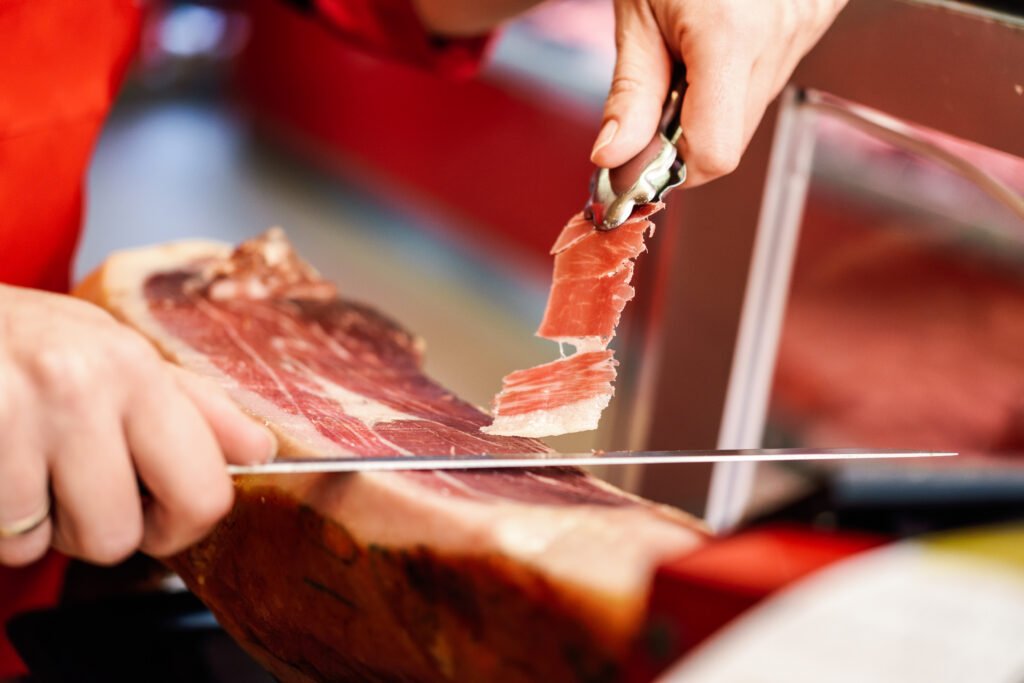
In a good tapas bar, ham is usually treated with respect. Look for a skilled cortador de jamón slicing paper-thin pieces by hand; that is when the texture is at its best and the fat begins to melt as soon as it touches your mouth.
The most natural companions are simple: crusty bread, a few olives and a glass of Spanish wine such as Rioja, Ribera del Duero or Albariño. Keep it un-fussy and let the ham do the work.
You can buy Serrano and jamón ibérico in many countries, but eating them in Spain is a different experience. A local bar, a bodega or a farm that produces cured ham gives you the full picture: the scent of the room, the pace of the service and the way the ham is handled.
It is also worth remembering that the most expensive ham is not always the one you will enjoy most. Personal taste matters, and the right slice, in the right place, can matter more than the label.
Good to know
If you want the best flavour, ask for the ham sliced very thin and served at room temperature. That is when the aroma and texture show themselves properly.
If you are curious about Spanish ham, these are the questions people usually ask before ordering it or taking some home.
Serrano is the more common cured ham in Spain, with a lighter, saltier taste. Jamón ibérico comes from the Iberian pig and is usually richer, more marbled and more complex in flavour.
Bellota means acorn. It refers to ibérico pigs that have been fed acorns, which gives the ham its distinctive flavour and texture.
According to the article, it can be dried and aged for up to 36 months. That long curing time is part of what creates its intensity.
Both work, but a good tapas bar or deli is the easiest place to appreciate it properly. Thin slicing and serving temperature make a big difference.
The article pairs both with Spanish wine, especially Rioja, Ribera del Duero or Albariño. Bread and olives are the simplest companions.
Discover Spain with Spainholiday
We share engaging articles on Spanish culture, food, sights and practical tips to help make your holiday even better.
👉 Like us, share our articles and follow along for more inspiration for your next Spanish adventure!
Holiday homes on Spainholiday
PARTNER
Living in Spain – or thinking about it?
News, practical guides and local services for internationals in Spain on NewInSpain.
Advertise your business here
Restaurants, car hire, cleaning and local services: reach travellers and holiday home owners in your area.
Own a holiday home in Spain?
List it on Spainholiday for a low fixed fee – no commission on your bookings.